Crypto scam: how to recover your money in Switzerland
Did you invest on a fake platform or send cryptocurrency to a scammer? Here is what to do, step by step, to maximise your chances of recovery — and the traps to avoid.
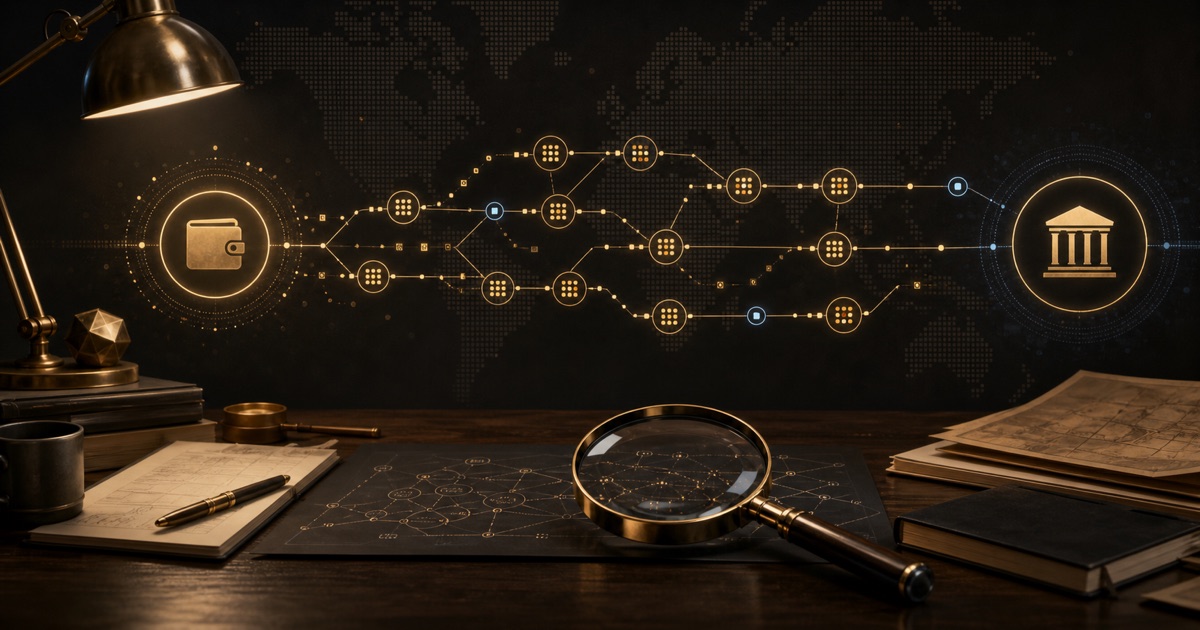
Fund recovery after a cryptocurrency scam is never guaranteed, but it is sometimes possible. Everything comes down to three factors: your speed of reaction, the quality of your evidence and the traceability of the funds. This guide details the actions to take right now, in order.
1. Act fast: the first 24 to 72 hours
The moment fraud is suspected, time works against you. Once converted or spread across several wallets, cryptocurrency becomes far harder to freeze. Within this window:
- Stop all payments immediately. No "unlock fee", "tax" or "withdrawal fee" is ever needed to recover an asset: it is a classic technique used to squeeze more money out of you.
- Do not cut off contact abruptly before you have saved everything: first keep the messages, profiles and contact details.
- Contact your bank if the funds left via a bank transfer (card or SEPA): a block or a funds recall is sometimes still possible very early on.
2. Gather the essential evidence
A solid case is what separates a shelved complaint from a workable investigation. Collect the following, dated and legible:
- The destination wallet addresses and the transaction identifiers (hash / TXID).
- The bank statements and transfer confirmations to the platform or exchange.
- The screenshots of the site, the app, the "account" showing fake gains, and of every conversation (WhatsApp, Telegram, emails, text messages).
- The exact URLs, phone numbers, names and photos used by the scammer.
3. Report the scam and file a complaint in Switzerland
In Switzerland, fraud is punishable under Article 146 of the Swiss Criminal Code. Several channels are complementary:
- Cantonal police: file a criminal complaint with your canton (Geneva, Vaud, Zurich…). This is the central step.
- Suisse ePolice: the national portal lets you report an online scam without leaving home.
- FOCS (Swiss National Cyber Security Centre): report cases of fraud and phishing to feed national threat monitoring.
- FINMA: check whether the platform appears on the warning list of unauthorised providers, and report it where relevant.
You are not required to have filed a complaint before starting a private investigation: both processes can move forward in parallel.
4. Alert your bank and the platform
If your funds passed through a regulated exchange (full KYC), a freeze request coordinated with the police has a better chance of succeeding. For bank transfers, ask your institution in writing to activate a funds recall procedure and to preserve the information on the beneficiary account. Note down every reference and every contact person.
5. Trace the funds: what the investigation can find
Contrary to a common belief, most blockchains are public and traceable. From the TXIDs, a money-flow analysis (chain analysis) can often:
- follow the path of the funds through intermediary wallets;
- identify the entry point into a regulated service (exchange, processor) where legal proceedings can be initiated;
- cross-reference, using OSINT techniques, the aliases, infrastructure and digital identities linked to the scam.
This work produces an investigation report that your lawyer and the authorities can use to support a request for seizure or reimbursement.
6. Your real chances of recovery
Let's be honest: there is no universal success rate. The odds depend on how old the facts are, on the nature of the scam, on where the funds went and on how responsive the parties involved are. A recent, well-documented case whose funds end up on a regulated platform offers far better prospects than an old case with patchy evidence. A serious assessment of your chances can only be given after your case has been reviewed.
7. The trap to avoid: the recovery scam
Have your case reviewed
Our OSINT investigators identify who is behind the facts, trace the money flows and build a complete case for your next steps. Feasibility assessment before any commitment.
Open my investigation case
Frequently asked questions
Can you recover money after a crypto scam?
Yes, it is sometimes possible, but it is never guaranteed. The odds depend on how quickly you react, on where the funds ended up (a regulated platform or not), on the quality of your evidence and on the cooperation of banks, exchanges and authorities. The faster you act, the more realistic it is to trace and freeze the funds.
How long do I have to react after a crypto scam?
Act immediately. The first 24 to 72 hours are decisive: this is the window in which a platform or a bank may still freeze funds before they are laundered or converted. Tracing remains possible later, but recovery becomes harder.
Should I be wary of companies that promise to recover my funds?
Yes. Be wary of any company that guarantees the recovery of your funds or that demands fees payable upfront, especially in cryptocurrency: this is a very common scam that targets victims who have already been defrauded. A serious provider first assesses your case and stays honest about your real chances.
Where do I report a crypto scam in Switzerland?
You can file a criminal complaint with your cantonal police, report the facts online via Suisse ePolice, forward the case to the FOCS (Swiss National Cyber Security Centre) and check whether the operator appears on FINMA's warning list. Fraud is punishable under Article 146 of the Swiss Criminal Code.
Official sources
This article is for information only and is not individual legal advice. For any decision, consult a qualified professional about your situation.